Showing posts with label environment. Show all posts

Tuesday, 8 January 2013

Enjoy Africa: But Please Remember It's Fiction.


If you are in the UK you will probably have watched the BBC's latest wildlife extravaganza, 'Africa'. The BBC Wildlife Unit is based in Bristol, where I live. Generally, they make excellent programs, but I feel a bit uncomfortable about this particular series.

First of all, the title. Let's get this straight: 'Africa' is not a wildlife reserve. Neither is it, as a BBC announcer commented, 'the world's largest wilderness'. It is a continent of 1 billion human beings, 57 countries, and countless cities, towns and villages. There are roads and railways. There are ports and supermarkets and TV stations and football teams and nightclubs and all the things that happen where there are human beings.

Throughout the nineteenth century, when Africa was being colonised, there was an idea of it as 'the dark continent'. It was an empty space, populated by wildlife and – depending on your preference – either degraded, semi-human populations, or by noble savages. It was a blank canvas, on which the Europeans could draw their fantasies.

A series like 'Africa' seems to me a very modern, beautifully shot version of those fantasies. A pristine, mysterious landscape, full of nature, red in tooth and claw. In the first episode, Kalahari, there was not one sign of a human in the landscape. 

 Fig 1. What wildlife filmmakers think Africa looks like.

Now, I am lucky and privileged enough to have been to Africa. I can tell you from my own experience that this is not the normal condition. Vast tracts of Africa are farmed, either locally, by subsistence farmers, or intensely. Even in those areas which are unfarmed, you will not go far without running into humans or their activities: beehives made out of hollow logs, hung in the trees; people herding cows or fishing or gathering wood, selling grilled corn by the roadside, or simply walking from A to B, to visit relatives, or to the church or pub.

This is not a tragedy. It is simply reality. In some places this is a beautiful, peaceful thing, in others people look worn and angry. But in very few places, is the continent naturally empty. Those shots you see in wildlife films are taken in wildlife reserves and game parks. These are largely areas from which the people have been moved out. Not recently (that's now frowned upon) but in decades past. This is not to say that Africans resent the game parks. On the contrary, many earn their living from them. But what you are looking at is not the 'natural state' of Africa.

These humanless, pristine spaces are maintained by humans who carefully count and preserve the populations of 'megafauna' (lions, giraffes, rhino, etc) which attract tourists and yes, wildlife crews. They do this, because rich westerners who want to see a pristine wilderness pay nicely for it.

The first episode of the Africa series, Kalahari, was shot in Botswana. Botswana is lucky to be able to maintain some of the largest nature reserves in Africa for a number of reasons. Firstly, they are geographically a sizeable country, with a tiny population (2m). Secondly they have the good fortune to be sitting on the worlds largest diamond fields, the profits of which, due to the good sense of some president gone-by, are partly nationalised. It is a quiet, well-run democracy with peaceful elections and a decent standard of living.

All the same, the nature reserves of Botswana do not simply sit there. They are run by a wildlife service which maintains and guards and manages these areas. Their personnel will include civil servants and ecologists and vets and scientists and ex-military personnel who combat poachers. Most of these professionals are African. You will probably never see them in a wildlife documentary.

Other countries which maintain large nature reserves are not as lucky as Botswana. Tanzania, for example, which has huge grassland reserves, is peaceful but extremely poor, while Congo, which houses the mountain gorillas, is possessed of ample resources but plagued by warfare. Tanzania, which relies on aid for much of its income, is under intense pressure to preserve its wildlife, which wanders across vast open tracts of country ideal for poaching. I'm not saying they shouldn't. I'm just saying that I've been in a primary school in Tanzania, and there were no chairs or tables for the children to sit at, just stones on the floor. Every time you decide to spend money on one thing, you're not spending it on another.

I'm not saying these parks shouldn't be there, or that we shouldn't make wildlife programs in them. Of course these ecosystems should be preserved: they are world-class heritage sites. What concerns me is that they are presented to us, removed from the real context and place which they are in. There seems to be an unlimited appetite for wildlife footage, yet no-one  considers the daily life of the continent to be of any interest whatsoever.

The crazy thing is that Africa is one of the most fascinating places I've ever been to. It is full of little-known history, fantastic culture, food, art and music. It is full of contradiction and uncertainty, and after decades of decay and stagnation, is, in many places, bursting into life again.

Personally I'd like to challenge the BBC to make an expensive, breathlessly narrated series showing the trials and travails of Africa's most interesting species: I mean, homo sapiens. Not holding my breath for that one, though.

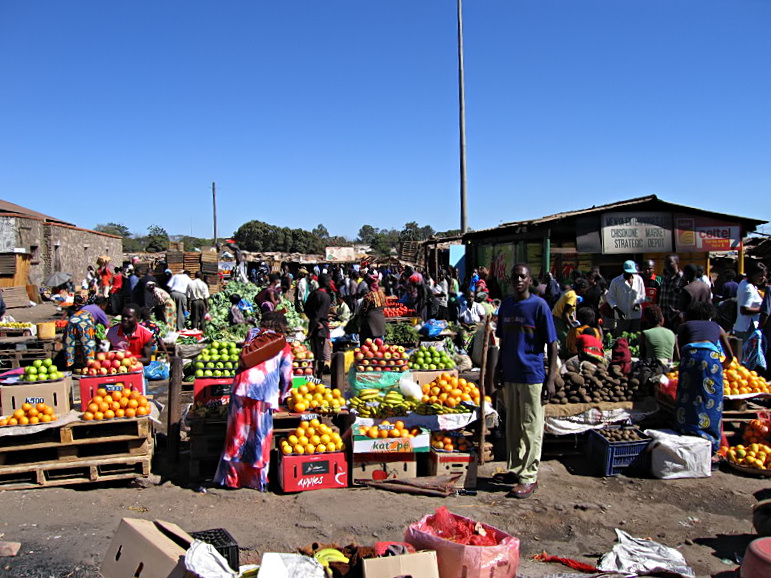
Fig 2: What I think Africa looks like.


Sunday, 5 February 2012

Cold? Ten Reasons to Mug A Sheep Today.***

Chilly right now, eh chaps? Even with central heating, a hot water bottle, a cat, duvet and takeaway vindaloo. Of course, years ago, back when winters were real, and none of your imported winter crap, the poor old Brits used to get through winter without subjecting themselves to such indignities. Look at Winston there: is he clutching a microwaveable hot water bottle and snivelling? Of course not. How did our forebears manage this, you cry? Well, I'll let you into a secret: wool.

Wool is awesome. Firstly wool, in its native state is practically free. It comes off sheep which eat grass, which is free, and hang around draughty but picturesque uplands that nobody else wants to visit. Those sheep make a new coat of wool every year. This must have been so useful for early natives of Britain, you could almost think somebody designed it that way, till you remember that sheep evolved here.

Britain used to be a world leader in wool. British cloth was exported all over the place. If you don't believe you can get rich off the back of sheep, visit the Cotswolds, and look at the houses of the wool merchants, who were rich from the middle ages till the invention of steam-powered mills, when the whole shebang moved to Yorkshire. Yorkshire had an advantage, having sheep and coal.

Wool keeps you warm and dry without making you sweaty. (This is something that manufacturers of outdoor gear swear they know how to do. They don't.) Here's the science bit: the density of fabric is what affects its warmth and water-repelling abilities. If your coat does not keep you warm and dry, pick it up with one finger. Light? Now, go and try the same trick with a 50-year old men's overcoat. Your hand will practically fall off. That, ladies and gentleman, is because the 50 year old coat is made of densely packed wool fibres. The modern one isn't. British wool fabrics are traditionally dense, (like the upper classes, y'know).

Sheep have to put up with a lot of rain, so wool has natural water repellent properties. If you buy a goretex coat, the water-repellent properties come from dangerous chemicals which will probably have strange effects on you and your offspring. I have a goretex coat. It does not keep me dry in a downpour for a 20-minute cycle ride. I have a duffle coat, and its water-repellent qualities last about twice as long. Also, it looks nicer, cost less and keeps me warmer.

Wool produced in Britain is not much used by mass retailers, because  companies that produce it tend to be smaller enterprises that cannot meet demand for thousands and thousands of garments across a global chain. Also, it is simply not as cheap as synthetics. But cheap clothing made from synthetics or cotton carries huge hidden costs: the carbon footprint as it is lugged around the globe, the exploited workforce that produce it in conditions that would be illegal in the UK, and the difficulty of disposal. Also, to every cheap sweater produced in Vietnam, add your taxpayer's contribution to somebody's dole money in Yorkshire or Scotland, as they sit on the sofa chugging anti-depressants. Am I joking? Hell, no.

Also, before I get too earnest, can I just say that that droopy thing you're wearing, that cost £35 and looked so great on the hanger, that's now covered in bobbly bits and has inexplicably stretched after one wash, darling, darling, it looks just dreadful, really. If I tell you that for the price of two horrid sweaters, you could have had one gorgeous one from Scotland*, you're going to hate me, aren't you? Probably. Also, that sweater that cost twice as much will last four or five times as long. Buying the cheap sweater is is a false economy.

Anyway, on the subject of sweaters, I love knitting. Sadly, if you go to a knitting shop, much of the wool is not produced in Britain. Instead you are often invited to part with a tenner for a single ball of wool from Peru, or New Zealand. This is mad, because you can get this British made wool for a very reasonable £3.50. Or this, or this, etc. However, many knitting shops don't even bother to include the country of origin in the listings for wool. Some British producers don't mention their wool is British; they don't seem to be proud of it. That's daft.

So I think it's time for us to go back to our roots and embrace the sheep. Not literally, you'll get arrested. But we have a resource, a great tradition, and probably lots of expertise which we can just about rescue before it pops its clogs. We need something in our economy that isn't just about pushing money around, and we need to bring jobs to deprived regions of the country. And look, we can all feel smug, socially conscious and cosy, and look a little more stylish as well. It's what's called a win-win situation. Go and buy some British wool today!

Ten Reasons to Wear British Wool

1. It's breathable. You know that magic thing manufacturers of outdoor gear bang on about? Keeps you warm and cosy when its cold, and doesn't make you hot and sweaty when its warm? Wool is designed to deal with the British climate, since it evolved here. It's the result of a millenia-long research process, which is more than can be said of lycra.

2. It's environmentally friendly. It's a permanently renewable resource, since sheep have a new fleece every year. It hasn't been dragged halfway round the globe. It can be composted safely. Unlike say cotton, which is a pesticide intensive crop, which also uses up vast quantities of water.

3. Britain is good at producing wool. Or it used to be. British wool was once a thriving industry, renowned for its quality, which employed swathes of people across areas like Wales, Yorkshire and Scotland, which now experience high levels of unemployment. For every British made wool garment you purchase, you keep somebody in a job in the UK.

4. It's low maintenance. Unlike cotton and synthetics, wool garments need cleaning occasionally, instead of after one or two wears. This is cheap, good for the environment (less detergent, water and electricity use) and means you can spend time doing something more exciting than dragging misshapen lumps out of the washing machine.

5. It's economical. OK, it might hit your wallet in the first place, but you'll still be wearing it in five years time, unlike a synthetic or cotton garment. For example: Exhibit A, synthetic sweater from high st chain: £40. Exhibit B: 100% wool sweater from Scottish cottage producer: £80. Length of time before A disintegrates: 2 years. Cost per year, £20. Length of time before B disintegrates: 8 years (minimum). Cost per year, £10. The synthetic/cotton sweater is 100% more expensive.*

6. Nobody has been abused in the process of making it. It has all been produced in the UK, under UK law, by literate adults with health and safety and voting rights and access to healthcare. Unlike, say, cotton, which in major producer Uzbekistan, is harvested by hand, by children, under a forced labour scheme for the profit of dictator Islam Karimov, mostly known for boiling his opponents. No, I'm not making this up.

7. Sheep are intrinsically funny. Neither Islam Karimov, nor Dupont, makers of Lycra, are even slightly amusing.**

8. Wool is fun. You can knit, dye, and felt it. Oh, and insulate your house as well.

9. Wool is stylish and beautiful. It keeps its shape and does not bag, sag, or crinkle. Because it is a natural fibre, it takes a wide variety of dyes in subtle shades which cannot be achieved by synthetic fibres.

10. Wool is sexy. It is soft, warm, and tactile. It makes anybody look classy. To prove this, I merely ask: which of these two gents would you rather cosy up to? See, I rest my case.


*Scientific test conducted by me, on actual sweaters in my wardrobe. 

** In December 2011, the non-partisan organization Public Campaign criticized DuPont for spending $13.75 million on lobbying and not paying any taxes during 2008-2010, instead getting $72 million in tax rebates, despite making a profit of $2.1 billion, and increasing executive pay by 188% to $27.4 million in 2010 for its top 5 executives. Source: Wikipedia.

*** The author does not condone sheep-mugging, which is a figure of speech. Besides, unprocessed wool doesn't smell that great.

Sunday, 11 September 2011

Today's Seawater Forecast: A Little Bit Shitty

Dear blog-botherers, I am not right today. Before you cry, 'that's normal!' what I mean is that I am a little bit sicky. My insides have not been happy since I came back from Cornwall ten days ago. And you know what this means. I have caught lurgy from swimming in dirty seawater. Again.

This beach is not the culprit.
I love swimming in the sea. I also love body-boarding, because it is one of the only sports where every time you fall off, you land on something soft. I also love Cornwall. Last time I was there I went for a swim at full tide, by evening, in this beautiful bay. The water was warm and there was nobody there except a lovely yacht moored in the bay. It was absolute bliss.

Sadly, the idyllic look disguises the fact that British seawater is basically full of crap. This is the third time in a few years that I have some kind of lurgy caught from being in the water. First time I had some kind of horrid hacking cough that lasted six weeks. Next, after a trip to Wales, some kind of rash that got under any scratch or break in my skin (quite a few, after a weekend camping) and turned them into a mess of itchy blisters. I should point out that generally I have the constitution of an ox. I am not the kind of person who faints at the sight of a germ. However, I reckon I get in the sea on average three weekends per year. Over the last five years I have caught something three times, so that means I am catching something unpleasant about 20% of the time.

If you think I'm making this up, try this link, which explains exactly how all this crap ends up in the sea, usually after a bout of heavy rainfall.

One winter I was visiting a friend who runs a hostel on the Cornish coast. Below the hostel, we could see cascades of white, unpleasant looking stuff pouring onto the beach from the river. The hostel is next to a water treatment plant, and there was overflow pouring from that as well, straight down the cliff. My friend and another surfer called the Environment Agency, who are responsible for this kind of pollution. The Environment Agency cheerfully said that they didn't come out to investigate an incident until 12 people had reported it. Now, this was in February, it was pissing it down, there was a gale force wind, and you would have struggled to find 12 people in the vicinity, let alone 12 who were going to phone it in. Obviously, this non-response policy keeps the Environment Agency's statistics a lot cleaner, but it doesn't do much for the seawater.

I am not a scientist, and don't know much about measuring water quality. I do know that everything I've caught has cleared up with antibiotics/antibacterials, which means it's bacterial, not viral. This, as far as I understand, is compatible with either sewage or animal effluents, (from intensive farming).

The beach where I caught several of these interesting ailments is a popular tourist destination. In summer, there are hundreds of people dunking their children in the seawater. Many of those people probably nuke their homes with all kinds of bleach and anti-bacterial sprays. I wonder if they know that they're basically dunking their beloved offspring into a very diluted solution of shite.

I don't know what we should do about this, seeing as how the Environment Agency seem more concerned for their statistics than for people's health, but I do suggest joining Surfers Against Sewage, a really good charity, who campaign on all these issues, not just for surfers.