Terrible news! Found out today that ITV won't be commissioning another series of Home Fires. Quite rightly, somebody has started a petition to bring it back. Please sign it, here.
Now I know it's only a TV show and there's shit going on in the world and all that but humans need stories. Stories show us how to deal with difficult situations and how to behave with dignity. Humans tell stories abut things that are important. And if you don't ever see people like yourselves in stories then you easily get to thinking that's because you're not important.
One of the reasons I loved Home Fires was that it showed just how ordinary people were important, and how they helped influence history. I loved the mix of ages and classes going in the storyline, and the regional accents that seem to be heard on TV less and less these days.
Home Fires had very good viewing figures, strong writing, a high level of historical veracity, and a thoroughly excellent cast of actors who largely weren't 'names'. I have no idea why ITV would wish to cancel it.
If you want to know more about why I think it deserves to come back, you can read my review, below.
____________________________________________________________________
If, like me, you grew to loathe Downton Abbey, you may be suspicious of Sunday-night vintage-costumed TV. Because of this I was initially cautious of Home Fires, ITV's world-war-two set series about a group of women in the Women's Institute in the fictional village of Great Paxford, in Cheshire. Oh how wrong I was! Home Fires is literally the best thing ITV have made in ages.
If there's one thing I don't like in a historical series like Downton, it's setting up a 'good old days' where everyone knew their place. Because the twentieth century wasn't like that, not even the Edwardian era. Home Fires sidesteps this magnificently, by presenting a world that is full of change, bringing opportunity and threat in equal measure.
Home Fires is based on Jambusters, a popular book by Julie Summers about the WI in WW2, so it has solid academic research to back it up, and its reliance on frequently-ignored details is one of the things that makes it so great. Too often, films and TV about great historical events concentrate on the men involved, and on bloody and decisive battles. Film directors parade their claims to 'realism' by making movies as bloody and explosive as possible. But many important things about history are neither bloody nor explosive, and not all the explosions are of the bloody kind either - some are social, economic, scientific and yes, sexual.
During World war Two, ordinary people understood that success or failure relied on many factors - organisation, morale, production of war material, scientific and social advantage. If you watch films made at the time, this is abundantly clear: but in the macho post-war film world all these things were swept away in favour of guns, and men, and guns and men and guns. Home Fires puts all this interesting social, economic and scientific history back in its rightful place. In doing so, I feel that it's rightfully and slightly subversive.
To start with, it unapologetically focuses on the women, without ever making the men irrelevant. The details of these women's lives are allowed to matter, as are
the relationships between them, as much as with the men in their lives. Sometimes, series focusing on women's lives are twee, sometimes they are comedic, sometimes they are slushy and romantic. Sometimes they are just awful and implausible, like the terrible series about nurses in WW1. Home Fires doesn't do any of these things: it lets its characters breathe, and treats their joys and sorrows as worthy of respect.
One of the things I enjoy most is that with the exception of one or two characters, there is a good deal of moral ambiguity going on. Posh Mrs Cameron is both a good egg at heart and an insufferable snob; Mrs Scottlock, the accountant, is both trying to protect her friends and inform to the police, and Stan the farmer is both a bit of a hero and also a bit of a nutjob. The vicar's wife is honorably not having an affair while her husband is a POW, but you know she's absolutely dying to, while closet lesbian Teresa may invite sympathy but is also giving the run-around to an entirely honourable RAF officer who frankly deserves better.
Then there's the men, who are neither better or worse. Well, except in the case of horrible Bob. I'm hoping horrible Bob will get his face melted by an incendiary bomb, because I can't think of anything else bad enough. I hate horrible Bob with a vengence, not only because he abuses his wife, but also because he is a writer. We have never been treated to horrible Bob's horrible prose, but I just know that it is vile egotistical sub-Hemingway trash in which the main character is Bob, portrayed as a hero. Look, I might be getting over-involved here, ok.
Anyway, apart from Bob, there's lovely Czech army officer Captain Marek Novotny. Now, I do have a complaint about Novotny: why is he played by a Danish guy? Are there not any actors in the Czech republic? Are they all permenantly engaged in productions of Kafka? Cannot one small central European state muster one leading man appropriate for an unhappily-married middle-aged lady to lust after? Anyway, ever in the service of journalistic integrity, I emailed the Czech Embassy to ask for their response, and they pointed out that since Maigret was currently being played by Mr Bean, they weren't that upset. (I'm taking that to mean they are upset, a little, but are taking it on the chin, in a manly sort of fashion.)
Anyway I think Marek is maybe too good to be true, and may turn out to be a German spy. If he isn't, I'm giving him two weeks before he's arrested for being one.
Anyway, I'm off to watch the next episode. Come friendly bombs, and fall on Bob!
PS If ITV don't commission another series of this, I'm going round with a pitchfork. A vintage, era-appropriate one, obviously.
Showing posts with label TV. Show all posts
Showing posts with label TV. Show all posts
Sunday, 1 May 2016


Thursday, 24 December 2015
I'm planning a crime spree for christmas
I dunno about you, but I'm planning a bit of a crime spree over Christmas. Christmas is a bit stressful, and I always find a bit of murder gets me through nicely. It has to be the right kind of murder, though: none of yer scarcely-clad nymphettes pornographically displayed for viewers' delectation around here, thank you! Modern crime is so tedious. I prefer a good old fashioned killing that actually taxes my brain a bit. Glamorous locations are a plus, of course, and anything involving cocktails is a bonus.
 If you are looking for a suitable cocktail to do away with some of your offensive relatives, you may be disappointed by A is for Arsenic by Kathryn Harkup, which despite telling in forensic detail how Agatha Christie committed dozens of poisonings, is sadly little help in planning to do away with that great-aunt who just refuses to die. Harkup is a chemist and Agatha Christie fanatic and writes with enormous enthusiasm and knowledge about Christie's favourite modus operandi of murder.
Each chapter details a particular poison and goes through how it works, the history and symptoms, which of Christie's books it features in, examples of real-life poisonings, and the forensic history of how these poisons became detectable. It covers all sorts of weird and strange real-life crimes I'd never heard of, such as a Belgian lady serial killer who killed up to 20 people in the 1930s.
A is For Arsenic is quite fascinating if you are interested in Agatha Christie, or indeed in forensic science or the link between science and literature. Of course I adore Christie for her classic whodunnits, but I had no idea how carefully she constructed her fictional murders, using knowledge she gained working in a hospital pharmacy during World War One.
 My main worry about A is for Arsenic was that it would be riddled with spoilers, but Harkup cleverly talks about the murders in Christie's books without giving too much away. Which is good, as my other Christmas reading is this.
A number of Christie's novels were set in the Middle East, which she often visited with her second husband, the archaeologist Max Mallowan. Mallowan was fourteen years younger than her. "An archaeologist is the best husband a woman can have. The older she gets the more interested he is in her," Christie once quipped. If you go to the Ashmolean Museum in Oxford, you can see a beautiful necklace made of ancient beads which Mallowan excavated and had made into a necklace for her.
After years of awful pulpy-looking editions of Christie, the current 30s-themed paperbacks are really handsome. This particular copy came from Topping and Co in Bath, who have the best selection of Agatha Christies, hardback and paperback, I've ever seen in a bookshop. (They are also well stocked with the British Library's Crime Classics series, which includes many other classic 30s whodunnits. I read A Mystery in White last Christmas, and thoroughly enjoyed it.)
If you've only ever watched Christie as a TV adaptation, I really recommend you purchase yourself a book. While the TV adaptations are enjoyable, to appreciate Christie's real cleverness you need to read the text, and experience the full frustration of knowing you read all the clues and still didn't have a clue whodunnit.
There are a few things that you can rely on in a Christie. Apart from murder, these are: an interesting location, poison, and that several suspects will have committed some crime other than the murder. Watching a TV adaptation, its easy to think of it all as twee, but reading the books, with their jealous, grasping families and lying servants, you see Christie had a far from rosy view of humanity, and positively revelled in the less pleasant side of human nature. What she didn't, though, was lay out murder victims as gory, bloody thrills, like many modern crime dramas do. An Agatha Christie may be dark, but it is an exercise in intellectual puzzling rather than voyeurism. Behind the antique detailing, she is quietly subversive too. Her heroes are easily dismissed: an effete little refugee (yes, Hercule Poirot is a refugee) and a little old spinster that nobody takes any notice of.
I'll be watching, of course, but I don't feel British TV does crime that well, it's either a bit creepy, like godawful sexy-serial-killer outing The Fall, or too predictable. Who wants to see a miserable detective trying to solve a murder when you already know the answer?
I am however a big fan Scandi-Noir thriller the Bridge. I like to think Christie would have approved of the Bridge's Autistic Lady Detective and everybody-has-a-motive plotlines, so I may just dig in with a box set of that.
 If you are looking for a suitable cocktail to do away with some of your offensive relatives, you may be disappointed by A is for Arsenic by Kathryn Harkup, which despite telling in forensic detail how Agatha Christie committed dozens of poisonings, is sadly little help in planning to do away with that great-aunt who just refuses to die. Harkup is a chemist and Agatha Christie fanatic and writes with enormous enthusiasm and knowledge about Christie's favourite modus operandi of murder.
Each chapter details a particular poison and goes through how it works, the history and symptoms, which of Christie's books it features in, examples of real-life poisonings, and the forensic history of how these poisons became detectable. It covers all sorts of weird and strange real-life crimes I'd never heard of, such as a Belgian lady serial killer who killed up to 20 people in the 1930s.
A is For Arsenic is quite fascinating if you are interested in Agatha Christie, or indeed in forensic science or the link between science and literature. Of course I adore Christie for her classic whodunnits, but I had no idea how carefully she constructed her fictional murders, using knowledge she gained working in a hospital pharmacy during World War One.
 My main worry about A is for Arsenic was that it would be riddled with spoilers, but Harkup cleverly talks about the murders in Christie's books without giving too much away. Which is good, as my other Christmas reading is this.
A number of Christie's novels were set in the Middle East, which she often visited with her second husband, the archaeologist Max Mallowan. Mallowan was fourteen years younger than her. "An archaeologist is the best husband a woman can have. The older she gets the more interested he is in her," Christie once quipped. If you go to the Ashmolean Museum in Oxford, you can see a beautiful necklace made of ancient beads which Mallowan excavated and had made into a necklace for her.
After years of awful pulpy-looking editions of Christie, the current 30s-themed paperbacks are really handsome. This particular copy came from Topping and Co in Bath, who have the best selection of Agatha Christies, hardback and paperback, I've ever seen in a bookshop. (They are also well stocked with the British Library's Crime Classics series, which includes many other classic 30s whodunnits. I read A Mystery in White last Christmas, and thoroughly enjoyed it.)
If you've only ever watched Christie as a TV adaptation, I really recommend you purchase yourself a book. While the TV adaptations are enjoyable, to appreciate Christie's real cleverness you need to read the text, and experience the full frustration of knowing you read all the clues and still didn't have a clue whodunnit.
There are a few things that you can rely on in a Christie. Apart from murder, these are: an interesting location, poison, and that several suspects will have committed some crime other than the murder. Watching a TV adaptation, its easy to think of it all as twee, but reading the books, with their jealous, grasping families and lying servants, you see Christie had a far from rosy view of humanity, and positively revelled in the less pleasant side of human nature. What she didn't, though, was lay out murder victims as gory, bloody thrills, like many modern crime dramas do. An Agatha Christie may be dark, but it is an exercise in intellectual puzzling rather than voyeurism. Behind the antique detailing, she is quietly subversive too. Her heroes are easily dismissed: an effete little refugee (yes, Hercule Poirot is a refugee) and a little old spinster that nobody takes any notice of.
If you really are too besozzled by Christmas to read a book, there is a new adaptation of And Then There Were None starting on BBC1 on Boxing day.
I'll be watching, of course, but I don't feel British TV does crime that well, it's either a bit creepy, like godawful sexy-serial-killer outing The Fall, or too predictable. Who wants to see a miserable detective trying to solve a murder when you already know the answer?
I am however a big fan Scandi-Noir thriller the Bridge. I like to think Christie would have approved of the Bridge's Autistic Lady Detective and everybody-has-a-motive plotlines, so I may just dig in with a box set of that.
Monday, 21 January 2013
Borgen, and Other Kinds of Stories.
Saturday night, I watched Borgen on BBC4. I can't even begin to describe how much I love Borgen. In case you haven't watched or don't get it: it's a TV series, in Danish, about a fictional Prime Minister, Birgitte Nyborg, her spin-doctor and his journalist girlfriend. A typical episode will kick off with Birgitte wondering who to dispatch to Brussels to be Danish representative in the EU. It sounds so tedious you think of turning off entirely. Then somehow, 50 minutes later, you're screaming, Noooooooo, Birgittte! at the TV, have spilt beer down the sofa, and are possibly blubbing hopelessly.
It is, as well as being exceedingly good, all exceedingly Scandinavian.
I was thinking about this the other night when I'd gone to the cinema. I was sitting in there, waiting for the movie, and the trailers came on. Normally I like this bit. Anyway, the trailers started. I can't even remember what they were for, just what I thought as they rolled away. 'An American story', I thought, and then the same thing, and then the same thing again. There was something with lots of explosions, a man wrongly accused of an air crash and a film about Lincoln. And I felt like I'd seen them all, already.
Now, to be clear, I have nothing against a story told by Americans, made by Americans, with Americans in it. What I mean is the type of narrative, the underlying story which drives the thing along.
Personally, as somebody who writes stories, I think that stories are massively important to people. They help people make sense of the world around them. They also influence people in fundamental ways, in teaching them what is important, their place in the universe, and how they should deal with people.
Now, regardless of genre, there is one story that Hollywood loves telling, over and over again. Hollywood grew up and boomed as America did, in the first half of the 20th Century. For years, it made films about how a man strode out into wilderness, defeated evil and brought home the lady. It still does, in a way. In the classic American narrative, one man (be he a soldier, president or explorer) goes out, and through his courage, strength and moral righteousness, saves the day.
It's not like the Americans are the only country whose films mirror their national obsessions. British films are often about class, French films are often about sex. The most successful German films in recent years have been about moral redemption from dictatorship and political excess: the only South African film to have been internationally successful is a comedy about conflict between species. It's just that the Americans have a larger and better-funded film and TV industry than the rest of these countries, and that's why, often, you're watching an American narrative, with all this entails.
Birgitte Nyborg is not like an American hero. She is the head of a shaky coalition government that is
permanently on the verge of falling apart. Borgen would different if it was an American series. Probably, there would be a terrorist threat to Denmark, and Birgitte Nyborg would save the nation, in some kind of dramatic way. In the actual series, Birgitte never saves Denmark from anything. She spends too much time in an office, wrangling and shouting at people. She doesn't even always succeed: in one episode she undermines an ally to make him more compliant, only to find he has resigned and tipped the entire government into crisis. Her personal life falls apart: her husband leaves her, and her daughter has panic attacks.
And yet, I think this is why people like her. She is, in the end, like us: she lives in an ordinary house and struggles, on a daily basis, to do the right thing in trying, contradictory circumstances. She isn't always terribly ethical, and she isn't always right or successful. But unlike many of the politicians in the real world, she does have one redeeming quality, which is that she does actually care. Also, she keeps on caring, and trying to sort it out, long past the point where most of us would have thrown in the towel. And for that, she is a hero, and you're left in no doubt of it.
The thing is, she is a hero of a different kind. She doesn't ever stride out into the desert, or do anything alone. She is part of a web of people, some helpful, some compliant, some absolutely mad or malign. And this, this web of interdependence, is the thing that you will never see in an American story. And it was as I was sitting there, in the cinema, that I thought of how very very bored I was of seeing that same old story, played out again and again.
It is, as well as being exceedingly good, all exceedingly Scandinavian.
I was thinking about this the other night when I'd gone to the cinema. I was sitting in there, waiting for the movie, and the trailers came on. Normally I like this bit. Anyway, the trailers started. I can't even remember what they were for, just what I thought as they rolled away. 'An American story', I thought, and then the same thing, and then the same thing again. There was something with lots of explosions, a man wrongly accused of an air crash and a film about Lincoln. And I felt like I'd seen them all, already.
Now, to be clear, I have nothing against a story told by Americans, made by Americans, with Americans in it. What I mean is the type of narrative, the underlying story which drives the thing along.
Personally, as somebody who writes stories, I think that stories are massively important to people. They help people make sense of the world around them. They also influence people in fundamental ways, in teaching them what is important, their place in the universe, and how they should deal with people.
 |
| Man with Gun: So very 20th Century |
It's not like the Americans are the only country whose films mirror their national obsessions. British films are often about class, French films are often about sex. The most successful German films in recent years have been about moral redemption from dictatorship and political excess: the only South African film to have been internationally successful is a comedy about conflict between species. It's just that the Americans have a larger and better-funded film and TV industry than the rest of these countries, and that's why, often, you're watching an American narrative, with all this entails.
 |
| Tired-looking woman making compromises: so very 21st Century. |
And yet, I think this is why people like her. She is, in the end, like us: she lives in an ordinary house and struggles, on a daily basis, to do the right thing in trying, contradictory circumstances. She isn't always terribly ethical, and she isn't always right or successful. But unlike many of the politicians in the real world, she does have one redeeming quality, which is that she does actually care. Also, she keeps on caring, and trying to sort it out, long past the point where most of us would have thrown in the towel. And for that, she is a hero, and you're left in no doubt of it.
The thing is, she is a hero of a different kind. She doesn't ever stride out into the desert, or do anything alone. She is part of a web of people, some helpful, some compliant, some absolutely mad or malign. And this, this web of interdependence, is the thing that you will never see in an American story. And it was as I was sitting there, in the cinema, that I thought of how very very bored I was of seeing that same old story, played out again and again.
Tuesday, 8 January 2013
Enjoy Africa: But Please Remember It's Fiction.
If you are in the UK you will probably have watched the BBC's latest
wildlife extravaganza, 'Africa'. The BBC Wildlife Unit is based in
Bristol, where I live. Generally, they make excellent
programs, but I feel a bit uncomfortable about this particular series.
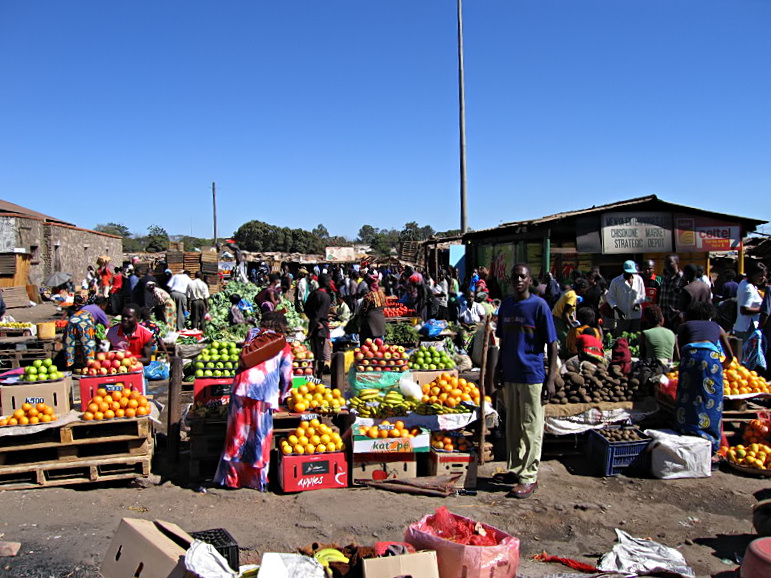
First of all, the title. Let's get this straight: 'Africa' is
not a wildlife reserve. Neither is it, as a BBC announcer commented,
'the world's largest wilderness'. It is a continent of 1 billion human
beings, 57 countries, and countless cities, towns and villages. There
are roads and railways. There are ports and supermarkets and TV
stations and football teams and nightclubs and all the things that
happen where there are human beings.
Throughout the nineteenth century, when
Africa was being colonised, there was an idea of it as 'the dark
continent'. It was an empty space, populated by wildlife and –
depending on your preference – either degraded, semi-human
populations, or by noble savages. It was a blank canvas, on which the
Europeans could draw their fantasies.
A series like 'Africa' seems to me a very modern, beautifully shot version of those fantasies. A
pristine, mysterious landscape, full of nature, red in tooth and
claw. In the first episode, Kalahari, there was not one sign of a
human in the landscape.


Fig 1. What wildlife filmmakers think Africa looks like.
Now, I am lucky and privileged enough
to have been to Africa. I can tell you from my own experience that
this is not the normal condition. Vast tracts of Africa are farmed,
either locally, by subsistence farmers, or intensely. Even in those
areas which are unfarmed, you will not go far without running into
humans or their activities: beehives made out of hollow logs, hung in
the trees; people herding cows or fishing or gathering wood, selling
grilled corn by the roadside, or simply walking from A to B, to visit
relatives, or to the church or pub.
This is not a tragedy. It is simply
reality. In some places this is a beautiful, peaceful thing, in
others people look worn and angry. But in very few places, is the
continent naturally empty. Those shots you see in wildlife films are
taken in wildlife reserves and game parks. These are largely areas
from which the people have been moved out. Not recently (that's now
frowned upon) but in decades past. This is not to say that Africans
resent the game parks. On the contrary, many earn their living from
them. But what you are looking at is not the 'natural state' of
Africa.
These humanless, pristine spaces are maintained by humans who carefully count and
preserve the populations of 'megafauna' (lions, giraffes, rhino, etc)
which attract tourists and yes, wildlife crews. They do this, because
rich westerners who want to see a pristine wilderness
pay nicely for it.
The first episode of the Africa series,
Kalahari, was shot in Botswana. Botswana is lucky to be able to
maintain some of the largest nature reserves in Africa for a number
of reasons. Firstly, they are geographically a sizeable country, with
a tiny population (2m). Secondly they have the good fortune to be
sitting on the worlds largest diamond fields, the profits of which,
due to the good sense of some president gone-by, are partly
nationalised. It is a quiet, well-run democracy with peaceful
elections and a decent standard of living.
All the same, the nature reserves of
Botswana do not simply sit there. They are run by a wildlife service
which maintains and guards and manages these areas. Their personnel
will include civil servants and ecologists and vets and scientists and ex-military personnel
who combat poachers. Most of these professionals are African. You
will probably never see them in a wildlife documentary.
Other countries which maintain large
nature reserves are not as lucky as Botswana. Tanzania, for example,
which has huge grassland reserves, is peaceful but extremely poor,
while Congo, which houses the mountain gorillas, is possessed of
ample resources but plagued by warfare. Tanzania, which relies on aid
for much of its income, is under intense pressure to preserve its
wildlife, which wanders across vast open tracts of country ideal for
poaching. I'm not saying they shouldn't. I'm just saying that I've
been in a primary school in Tanzania, and there were no chairs or
tables for the children to sit at, just stones on the floor. Every
time you decide to spend money on one thing, you're not spending it
on another.
I'm not saying these parks shouldn't be
there, or that we shouldn't make wildlife programs in them.
Of course these ecosystems should be preserved: they are world-class heritage sites. What concerns me is that they are presented to us, removed from the real
context and place which they are in. There seems to be an unlimited appetite for wildlife footage, yet no-one considers the daily life of the continent to be of any interest whatsoever.
The crazy thing is that
Africa is one of the most fascinating places I've ever been to. It is
full of little-known history, fantastic culture, food, art and music.
It is full of contradiction and uncertainty, and after decades of
decay and stagnation, is, in many places, bursting into life again.
Personally I'd like to challenge the BBC to make an expensive, breathlessly narrated series showing the trials and travails of Africa's most interesting species: I mean, homo sapiens. Not holding my breath for that one, though.

Wednesday, 22 February 2012
RIP Marie Colvin
In the last few hours, Sunday Times journalist Marie Colvin has been killed* in Syria, in Homs, in shelling by the forces of Bashar Al-Assad. Colvin was one of those old-fashioned beasts, a proper war-reporter. She'd done every war since Bosnia, and lost an eye in a grenade attack in Sri Lanka. She was also, clearly, female. So what? you might say. Aren't dozens of other people, many female, dead, as well? Yes, that's why Colvin was there.
But I still think it matters. It matters if you care about knowing what's going on in the world, and it matters if you're a woman.
First, many news organisations these days are so twitchy about accusations of bias and protection of their journalists that they like to station reporters in neighbouring countries where nothing is actually happening, or endlessly obsess about negotiations at the UN while the real action happens elsewhere. This strategy does not always pay off. Last year in Libya, dozens of journalists got stuck in the Rixos Hotel in Tripoli, effectively hostages of the Gaddafi regime, parroting press releases that became more and more surreal. When rioting broke out in London, the BBC were so concerned about the safety of their journalists that they didn't even have any pictures until about an hour after the riot was underway, and were totally trumped by other stations who had (perfectly safely) obtained footage.
As Colvin herself pointed out, none of this is a substitute for actually going to where the action is really happening.
Consequently, this gap, matched with improvements in internet technology, means that the space is often filled by bloggers and citizen journalists with a mobile phone. This is no bad thing in terms of getting the truth out, but it does mean that the unfortunate person has no backup in terms of medical, legal or consular support. They have to take their chances with the local population, of which they are usually a part.
Many of these amateur news gatherers, reporters and commentators are female. The point about this is that when you are a girl, you grow up with lots and lots of injunctions about looking after your own safety. Don't do this, don't do that, or something terrible will happen to you. And this is in a peaceful, Western Society, which is, by global standards, really pretty safe. Sometimes the worst offenders behind these well-meaning injunctions are other women. The amount of ear-bashing any young woman receives about 'safety' could lead them to believe that being 'safe' is the single most important thing in life, ever.
However, a little intellectual investigation shows that safety is a pretty negative concept. You could get so anxious about safety that you never left the house, and had a heart attack on the sofa instead. In the end, safety is a false concept. There are only greater and lesser risks, and things which might or might not be worth those risks. But there are also things of greater and lesser value, and for some people, letting the world know what's happening, trying to get out news of a great wrong, is worth that great risk. It's the moment when you fight your urge to run away, to hide in the cellar, and you go back towards the noise, instead, to find out what's happening.
If you are a woman, this flies in the face of everything that you're taught. It is a deliberate repudiation of the idea that safety is the most important thing to you as female. It shows that you think truth, accuracy, curiosity, a desire for knowledge - or even your career, or the adrenaline rush - are more important than that all-nebulous, disabling thing, safety. I really believe that the moment when you choose something else over safety is the moment when you stop being a honorary child (women and children, etc) and stake your place as a fully-fledged member of the human race.
And that's why Marie Colvin was important. Female war reporters. Standing up for your right, as a woman, to do something completely frikkin' stupid, and dangerous as well. Which is a right worth dying for, in my opinion.
RIP.
Respect.
And by the way, if you are planning to follow her example, read this.
*I think 'murdered' is actually the correct term, since they were not in a military installation but a press centre next to a hospital.
** I don't have a picture because I can't find a copyright free one and I don't want to get sued by News International.
But I still think it matters. It matters if you care about knowing what's going on in the world, and it matters if you're a woman.
First, many news organisations these days are so twitchy about accusations of bias and protection of their journalists that they like to station reporters in neighbouring countries where nothing is actually happening, or endlessly obsess about negotiations at the UN while the real action happens elsewhere. This strategy does not always pay off. Last year in Libya, dozens of journalists got stuck in the Rixos Hotel in Tripoli, effectively hostages of the Gaddafi regime, parroting press releases that became more and more surreal. When rioting broke out in London, the BBC were so concerned about the safety of their journalists that they didn't even have any pictures until about an hour after the riot was underway, and were totally trumped by other stations who had (perfectly safely) obtained footage.
As Colvin herself pointed out, none of this is a substitute for actually going to where the action is really happening.
Consequently, this gap, matched with improvements in internet technology, means that the space is often filled by bloggers and citizen journalists with a mobile phone. This is no bad thing in terms of getting the truth out, but it does mean that the unfortunate person has no backup in terms of medical, legal or consular support. They have to take their chances with the local population, of which they are usually a part.
Many of these amateur news gatherers, reporters and commentators are female. The point about this is that when you are a girl, you grow up with lots and lots of injunctions about looking after your own safety. Don't do this, don't do that, or something terrible will happen to you. And this is in a peaceful, Western Society, which is, by global standards, really pretty safe. Sometimes the worst offenders behind these well-meaning injunctions are other women. The amount of ear-bashing any young woman receives about 'safety' could lead them to believe that being 'safe' is the single most important thing in life, ever.
However, a little intellectual investigation shows that safety is a pretty negative concept. You could get so anxious about safety that you never left the house, and had a heart attack on the sofa instead. In the end, safety is a false concept. There are only greater and lesser risks, and things which might or might not be worth those risks. But there are also things of greater and lesser value, and for some people, letting the world know what's happening, trying to get out news of a great wrong, is worth that great risk. It's the moment when you fight your urge to run away, to hide in the cellar, and you go back towards the noise, instead, to find out what's happening.
If you are a woman, this flies in the face of everything that you're taught. It is a deliberate repudiation of the idea that safety is the most important thing to you as female. It shows that you think truth, accuracy, curiosity, a desire for knowledge - or even your career, or the adrenaline rush - are more important than that all-nebulous, disabling thing, safety. I really believe that the moment when you choose something else over safety is the moment when you stop being a honorary child (women and children, etc) and stake your place as a fully-fledged member of the human race.
And that's why Marie Colvin was important. Female war reporters. Standing up for your right, as a woman, to do something completely frikkin' stupid, and dangerous as well. Which is a right worth dying for, in my opinion.
RIP.
Respect.
And by the way, if you are planning to follow her example, read this.
*I think 'murdered' is actually the correct term, since they were not in a military installation but a press centre next to a hospital.
** I don't have a picture because I can't find a copyright free one and I don't want to get sued by News International.
Sunday, 25 September 2011
The Financial Crisis Explained, via Downton Abbey
I have lost my ability to watch news about the ongoing economic crisis. When I see Angela Merkel on TV, my brain blanks out what she's saying and goes: 'uh... lalala...ooh, she looks tired'. Christine Lagarde: 'yeah... blah... wow, nice suit'. No disrespect to either of these ladies, both of whom I hold in better regard than the average fuckwit who governs us, but I just can't concentrate on what they're saying.
I feel I am not alone. Last week a man in London lost $2billion, causing a slight raised eyebrow, followed by a wave of boredom. On thursday, the London Stock Exchange crashed through the 5000 barrier, causing millions across the nation to skip straight to the 2nd item in the newspaper.
Across the world, little numbers on people's computer screens are dying. And nobody, except the alleged owners of the alleged numbers, really cares. I have a theory about why. 1) Most people cannot understand economics. 2) Nobody believes that money is real anyway 3) Everyone has long-since concluded we are governed by a bunch of corrupt, incompetent theives, and frankly, we expect no less of 'em. 4) They are out panic-buying beans, before there's a queue for panic-buying beans.
The general and fundamental problem is that we have a ruling class who, despite the endless speeches, really have no idea how to deal with a massive crisis, because they were brought up in the previous century, when everything was hunky-dory. Bit like in 1914. Which brings me onto my next point. If the financial crisis isn't exercising the nation's imagination, I tell you what is: the return of Downton Abbey to our TV screens. I know, because I have a special twitometer which tells me these things. However, watching Downton Abbey is a bit like the financial crisis, and I'm going to explain why. Pay attention at the back, please!
1) The Big House = The Big Society. A small proportion of it loaf around, wondering about how they can best pass on their money, while the majority of the inhabitants are busy scrubbing floors. Chances of it surviving Series 2/Global Financial Crash 2 = depends who gets shot in the process.
2) Violet, Dowager Countess Grantham, is Christine Largarde, while Isobel Crawley is Angela Merkel. Since one is Aristocratic/French and the other is Bourgeois/German, these two grand dames don't see eye to eye.
Chances of surviving Series 2/Global Financial Crash 2 = Dowager Countess Lagarde will still be wearing great outfits and looking down aristocratic nose, long after last assault/austerity program has finished, while practical frumpster Isobel/Angela will try to implement lots of useful schemes to allievate disaster, making not much difference whatsoever. Penelope Wilton has, in fact, already signed to play Merkel in forthcoming movie Downfall 2: the Eurozone.*
3) The Earl of Crawley = politicians everywhere. Likes to think he's a decent, liberal sort of chap. In reality, unable to tie his shoelaces without staff doing it for him. Mostly thinks about how he can bequeath his title to a suitable successor, and is bit baffled by intrusion of real problem. Deluded by grandeur of own position. Chances of surviving Series 2/Global Financial Crash 2 = unlikely to go near any real explosions, at any time.
4) Matthew = the middle classes. Initially derided for being a bit arriviste, and for doing actual work instead of just owning wealth, in a crisis his common sense, decency, and willingness to get on with the job in hand are showing his real value. Unfortunately, right now, his job in hand is to get slaughtered/shot at. Chances of surviving Series 2/Global Financial Crash 2 without being maimed, damaged, or otherwise traumatised = virtually nil.
5) Cora, Countess Crawley = The Americans. Having bailed everyone out during the backstory/Recession 1.0, they have no more cash to throw at anyone's problems. Chances of pulling something out of the hat to get everyone through Series 2/Global Financial Crash 2 without blood-letting = none whatsoever.
6) Lady Mary Crawley = The youth of Europe. Ideally would like to form an equal alliance with the middle classes, but may end up in soul-destroying bondage to some disgusting old man with money, in order to keep body and soul together. Chances of getting through Series 2/Global Financial Crash 2 with dignity intact = not much, though may hold out for a happy ending eventually, by advantage of being younger than everyone else.
7) Hot chauffeur Tom Branson = the indignados and associated activist class. Always banging on about socialism, is the only person who can work the latest technology, and has no respect for class and all that mumbo-jumbo. Chances of surviving Series 2/Global Financial Crash 2 without getting gassed, shot down, or imprisoned = absolutely nil. However back he will be, possibly in a position of influence, and probably a great deal angrier. May make off with:
8) Wibbly posh liberal Sybil Crawley = wibbly posh liberals everywhere. May succumb to the charm, tech-fiddling abilities and undeniable sex appeal of the above, or may fall back on inherent poshness and run scared. Chances of surviving Series 2/Global Financial Crash 2 without rampant disillusionment: none.
9) John Bates & Anna Smith = everyman & woman, everywhere. Just want to escape servitude and have a nice little business of their own, a bit of dignity and a couple of kids. Unfortunately for them, Mr Bates has previously signed an unwise contract with:
10) Comedy villian Vera Bates = the banks. Mrs Bates/the banks don't want the couple to settle and run a small business, rather she/they are determined to screw every last penny out of the poor man by fair means or foul. Chances of surviving Series 2/Global Financial Crash 2 = everyone else is waiting for this cardboard villian to go away and die, preferably quite horribly, so the long-suffering couple can live a quiet and inoffensive life, together. Not likely to be banished by early episodes, due to unerring willingness and ability to blackmail people.
Next on Downton Abbey, somebody gets shot or gassed, while lots of people wring their hands and say how awful it is. Next in the Global Financial Crisis: somebody gets shot or gassed, while lots of people... ok, you get my drift. See? I rest my case.
Downton Abbey will be on ITV on Sunday night at 9pm. The Global Financial Crisis will be on your TV for the next six months, or longer. Schedules may vary according to which part of Europe you live in.
*I made that bit up
I feel I am not alone. Last week a man in London lost $2billion, causing a slight raised eyebrow, followed by a wave of boredom. On thursday, the London Stock Exchange crashed through the 5000 barrier, causing millions across the nation to skip straight to the 2nd item in the newspaper.
Across the world, little numbers on people's computer screens are dying. And nobody, except the alleged owners of the alleged numbers, really cares. I have a theory about why. 1) Most people cannot understand economics. 2) Nobody believes that money is real anyway 3) Everyone has long-since concluded we are governed by a bunch of corrupt, incompetent theives, and frankly, we expect no less of 'em. 4) They are out panic-buying beans, before there's a queue for panic-buying beans.
The general and fundamental problem is that we have a ruling class who, despite the endless speeches, really have no idea how to deal with a massive crisis, because they were brought up in the previous century, when everything was hunky-dory. Bit like in 1914. Which brings me onto my next point. If the financial crisis isn't exercising the nation's imagination, I tell you what is: the return of Downton Abbey to our TV screens. I know, because I have a special twitometer which tells me these things. However, watching Downton Abbey is a bit like the financial crisis, and I'm going to explain why. Pay attention at the back, please!
1) The Big House = The Big Society. A small proportion of it loaf around, wondering about how they can best pass on their money, while the majority of the inhabitants are busy scrubbing floors. Chances of it surviving Series 2/Global Financial Crash 2 = depends who gets shot in the process.
2) Violet, Dowager Countess Grantham, is Christine Largarde, while Isobel Crawley is Angela Merkel. Since one is Aristocratic/French and the other is Bourgeois/German, these two grand dames don't see eye to eye.
 |
| Dame Maggie Smith is |
 | |||
| the Director of the IMF |
 |
| Penelope Wilton is |
 |
| The German Chancellor |
3) The Earl of Crawley = politicians everywhere. Likes to think he's a decent, liberal sort of chap. In reality, unable to tie his shoelaces without staff doing it for him. Mostly thinks about how he can bequeath his title to a suitable successor, and is bit baffled by intrusion of real problem. Deluded by grandeur of own position. Chances of surviving Series 2/Global Financial Crash 2 = unlikely to go near any real explosions, at any time.
4) Matthew = the middle classes. Initially derided for being a bit arriviste, and for doing actual work instead of just owning wealth, in a crisis his common sense, decency, and willingness to get on with the job in hand are showing his real value. Unfortunately, right now, his job in hand is to get slaughtered/shot at. Chances of surviving Series 2/Global Financial Crash 2 without being maimed, damaged, or otherwise traumatised = virtually nil.
5) Cora, Countess Crawley = The Americans. Having bailed everyone out during the backstory/Recession 1.0, they have no more cash to throw at anyone's problems. Chances of pulling something out of the hat to get everyone through Series 2/Global Financial Crash 2 without blood-letting = none whatsoever.
6) Lady Mary Crawley = The youth of Europe. Ideally would like to form an equal alliance with the middle classes, but may end up in soul-destroying bondage to some disgusting old man with money, in order to keep body and soul together. Chances of getting through Series 2/Global Financial Crash 2 with dignity intact = not much, though may hold out for a happy ending eventually, by advantage of being younger than everyone else.
7) Hot chauffeur Tom Branson = the indignados and associated activist class. Always banging on about socialism, is the only person who can work the latest technology, and has no respect for class and all that mumbo-jumbo. Chances of surviving Series 2/Global Financial Crash 2 without getting gassed, shot down, or imprisoned = absolutely nil. However back he will be, possibly in a position of influence, and probably a great deal angrier. May make off with:
8) Wibbly posh liberal Sybil Crawley = wibbly posh liberals everywhere. May succumb to the charm, tech-fiddling abilities and undeniable sex appeal of the above, or may fall back on inherent poshness and run scared. Chances of surviving Series 2/Global Financial Crash 2 without rampant disillusionment: none.
9) John Bates & Anna Smith = everyman & woman, everywhere. Just want to escape servitude and have a nice little business of their own, a bit of dignity and a couple of kids. Unfortunately for them, Mr Bates has previously signed an unwise contract with:
10) Comedy villian Vera Bates = the banks. Mrs Bates/the banks don't want the couple to settle and run a small business, rather she/they are determined to screw every last penny out of the poor man by fair means or foul. Chances of surviving Series 2/Global Financial Crash 2 = everyone else is waiting for this cardboard villian to go away and die, preferably quite horribly, so the long-suffering couple can live a quiet and inoffensive life, together. Not likely to be banished by early episodes, due to unerring willingness and ability to blackmail people.
Next on Downton Abbey, somebody gets shot or gassed, while lots of people wring their hands and say how awful it is. Next in the Global Financial Crisis: somebody gets shot or gassed, while lots of people... ok, you get my drift. See? I rest my case.
Downton Abbey will be on ITV on Sunday night at 9pm. The Global Financial Crisis will be on your TV for the next six months, or longer. Schedules may vary according to which part of Europe you live in.
*I made that bit up
Subscribe to:
Posts (Atom)